Sunday, November 15, 2015

Gordie's Stats for 2015 NY Woodcock Season

NY's woodcock season this year ran for 45 days, from Oct. 1 to Nov. 14. Gordie, I, and frequently a friend or two, hunted 36 of those days. Hunts averaged, I’d estimate, 75 minutes. When I had guests, we worked a little longer; hunting alone on warm and dry early-season trips when birds were scarce, I’d cut Gordie's day short. We have the time and the temperament to prefer a short but daily hunt to, for example, big slogs on the weekend.

I keep woodcock logs for the NY DEC; for the Federal FWS; and for a bunch of (us) crazy old coots who subscribe to Grouse Tales. I’m using data from these three to mention 4 statistics from our 2015 woodcock outings.


1) Gordie averaged just under 3 flushes per hunt. If my 75 minute/hunt estimate is pretty close, that’s a flush every 25 minutes. I tried very hard not to count reflushes, and so Gordie’s total flush count would actually be higher than listed. But I’m pretty sure we moved a new bird about every half hour we hunted.

The best period for multiple flushes ran from Oct. 21 to Nov. 1. From the 21st to the 25th, Gordie flushed 4, 5, 4, 6, and 5 birds; successful shooters in this period were Rick J. and Dids. From Oct 30 to Nov. 1, Gordie flushed 4, 5, and 8 birds; successful shooters in this period were Joey K. and I;

2) Almost 50% of the birds Gordie flushed were shot at. This requires some explanation. I count for logging purposes dead birds by *dog*, not by gunner, as I’m a “dog man” first. So the shooting involved here was done not just by me but by my guests as well. I probably shot at fewer than 50% of the flushes I saw, as I don’t like to shoot at birds in very, very thick cover which offer a long, uncomfortable, and possibly fruitless chance for a retrieve. OTOH, my guests, many of whom are relative newbies, take shots such as they can;

3) Only 20% of the birds flushed were killed. This percentage acknowledges that we hunt in very, very thick places, and that newbies are often the gunners. I like to leave my gun at home when I take guests so that they’ll *know*, when a bird goes down, that they’re the successful shooter. But lots of stuck safeties and “oh, is *that* a woodcock?” tend to depress this statistic; and

4) About 40% of the birds shot at were killed (this follows algebraically from #2 and #3 above.) Given all that comes before, killing 40% of birds in tough places, with newbies often taking the shot, ain’t half bad.


All these numbers are fun for math geeks like me to fiddle with. But as the MasterCard commercial avers, to hunt 36 days with my 11 year old dog both alone and with friends new and old in familiar thickets is priceless. What a great year!


PS: The Shot of the Year was made today as the season ended. Gordie flushed a bird from a stand of dogwood and it offered an easy shot as it flew low to the ground down an open lane. Jim S. drew a bead, but then as Gordie came rushing out of the brush after the bird, he safely raised his gun and held fire. Good job there, Buddy.

Monday, July 13, 2015

Fishing in NY 2015


(Entries will be added chronologically below)
May 4 — Wyoming County
I finally got to wet a line this year. I waded into the creek and began working the very first run with a #16 Adams Wulff. On about the third cast I had a splashy rise and refusal from what appeared to be an average size fish hereabouts. I thought “Wow! It’s going to be a great day!” Naturally, that was the last fish I saw all day.
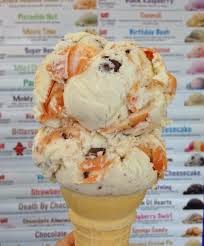
Nevertheless, it really was a great day. It started in fading sunshine and 79°F, a wonderful change from our frigid and snowy February. On the way home, I stopped at the ice cream shop in Sandusky and had the season’s first ice cream cone, one scoop each of Fool’s Gold


and of Caramel Praline Turtle.


I thought “Wow! It’s going to be a great year!”


May 24 — Wyoming County
I fished the No-Kill section of w. NY’s best trout stream that runs parallel to Route 39. I was surprised that I had the whole stretch to myself on a holiday weekend, as there were no cars in the upstream DEC parking spot. After I got on the water, I understood why. Let’s just say it was a bit claustrophobic. If I ever go back there again, it will be after Pai Mei teaches me to punch a tight 30’ loop with an 8” fly rod.
The water was certainly nice, and I in fact had splashy refusals in each of the runs I had an opportunity to cast to. But there was too much bushwhacking and not enough fishing for my tastes.
On the drive home, I stopped at Mar Mac for a Byrne Dairy ice cream cone. Two scoops of Holy Cow restored my happy mood. 


June 22 — Cattaraugus County
Today I fished a favorite stream near Delavan for the first time this year. Spring run-off always alters the stream bed, and last year's honey holes are often blown out before opening day.
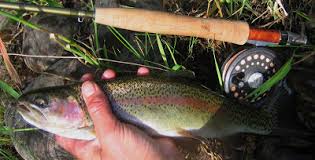
And so it was for the first three quarters of the beat I fished. But what holes and runs had been destroyed downstream were replaced by really attractive runs upstream. In one of these new holes, I caught a chunky rainbow maybe 9” long on a #16 Adams Wulff. The splashy rise suggested a smaller fish, but as I stripped in line to get him off the hook and released, he seemed to gain weight. What a fine fish! Of course, when I went to take his photo, the battery in my camera was dead. Rather than search my pack for the iPhone and risk losing him, I simply held him upstream in the current until he felt strong enough to fin his way back home. I googled for a fish that was close in size and color, just to post a fish pic rather than an ice cream cone’s.

In a new pool upstream from there, I had a splashy refusal from a trout that looked considerably bigger than the fish I released. No kidding. I’ll be back there again this summer.

July 13 — Cattaraugus County


Today I went back to Cattaraugus County to the same stream where I’d had good luck last time. I knew I’d be fishing two different sections of the stream. Because I hadn’t tried my brand new GoPro yet, I elected not to baptize it on the longer stretch on which I started the day. Too bad. I caught 3 nice rainbows on a #18 Royal Wulff in the same pool where I’d caught a nice fish last time. Dang!

Another reason I didn’t wear the GoPro is that there’s a long march on the rural roadside from where I stop fishing back to the car. The locals thereabouts always wave and say Hi when they see the amusing geezer with his quaint fish pole wobble by. But that same guy, I feared, might get a warmer reception if he looked instead like some space alien. Think of that nerd kid in Sixteen Candles:


My second beat was shorter, and that’s where I strapped on the GoPro for its test run. I put it over my backwards baseball cap — hate that look… — and adjusted it as seemed about right in my reflection in the car’s rear window.

I was surprised at how easy the gizmo was to use. One click started the video camera; one click stopped it. Rinse and repeat. I wouldn’t know until I got home whether the camera was focused on The Action, or at the treetops, or at my feet. Turns out, no worries. Brainless, and thus perfect for me.

The attached vid shows, at a second or two from each endpoint, first a small “refusal” and then a really exciting refusal (I think the lens must be some sort of wide angle affair. That would explain why it’s so easy for the camera to record where you’re looking, but also why it makes the center of the action look small and far away).


Sunday, March 29, 2015

White Water Kayaking On Franklin County’s Salmon River Above Whippleville

I got an abrupt introduction to canoeing in 1965 when I attended the M-3 Minnesota Outward Bound School. I don’t know whether Outward Bound has softened its approach since then, but in 1965 we “campers” were given the full Zack Mayo.

By M-3’s end, we were all pretty fair hands with a Grumman, and I came away enjoying canoeing in water either flat or white. Running Class IIs with friends got me interested in upping the ante both in class and in craft. And so in 1980 I bought river running kayaks for Nancy and me. We next headed up to a “kanu camp” in Ontario to get a bit of instruction. The camp operators were quite good themselves at white watering, but hugely overly optimistic as judges of our slalom potential. Here’s a shot of our “training site.” We still don’t know how we got out of there alive.


In a triumph of hope over experience, Nancy and I tried kayaking again a month later in some gentle current on the Salmon River that flows north through Malone in Franklin County. We found the little bit of current along Park Street a little too much. The kayaks shortly thereafter became a Sawyer Cruiser.

My alert s-i-l Patsy found this link of some serious early spring kayaking on the Salmon straight down from Chasm Falls. These guys are good. Maybe crazy. Probably both.

Tuesday, September 23, 2014

The J. O. Ballard Mill in Malone, NY Produced Durable Plaid Cloth That Was "All Wool And A Yard Wide"

(This post first appeared on February 26, 2010 under the title "A Ballad Of Ballard Plaid." After my visit to the Franklin County Historical and Museum Society in September, 2014, I was able greatly to expand the article under its current title. Many thanks to Ms. Jean Goddard, Ms. Diane Bonenfant, and others who assembled Ballard items from the Society's collection and organized them for my inspection.)
My father in law Paul D., DVM gave me a pair of experienced “Malone pants” shortly after I married his lovely daughter Nancy in 1978. He told epic stories of the heroic cloth from which they were made, warm when wet and nearly bullet proof. The fabric was so thick and sturdy that when I brought the pants back to Buffalo for tailoring, it was difficult to find anyone who felt comfortable working with it.

“Malone pants” came from the Ballard Mill, located on the Salmon River in Malone, NY. Of particular interest to my father in law was Ballard’s local flock of sheep. He claimed that the long Malone winters made the wool extra special. I don’t recall Doc telling me whether he'd ever provided vet services to the Ballard flock. The last of those sheep were long gone by the time I arrived on the scene. What I've learned since about the Ballard mill follows.


The Man

Jay Olin Ballard was born in Mexico, NY on January 8, 1858. He settled in Malone, NY in 1887. In 1891, he opened his eponymous mill in partnership with his brother-in-law Col. William Skinner. After transferring operation of the mill to his nephew Robert Skinner, Mr. Ballard passed away in the first half of the 1930s.

Jay Olin Ballard

While Mr. Ballard insisted on making a quality product, he was also solicitous about his workers’ well-being. For example, he put on an annual 4th of July Field Day for his employees and their families on his mill’s grounds. The area in front of the mill was decorated with colored lights, and games were played in the afternoon, while a band played music for dancing in the evening. For those not interested in the games, there were fishing events held on the Salmon River. In this letter from the Franklin County Historical & Museum Society's collection, Mr. Ballard thanks an employee who’d shown that this concern was mutual:


The Plant

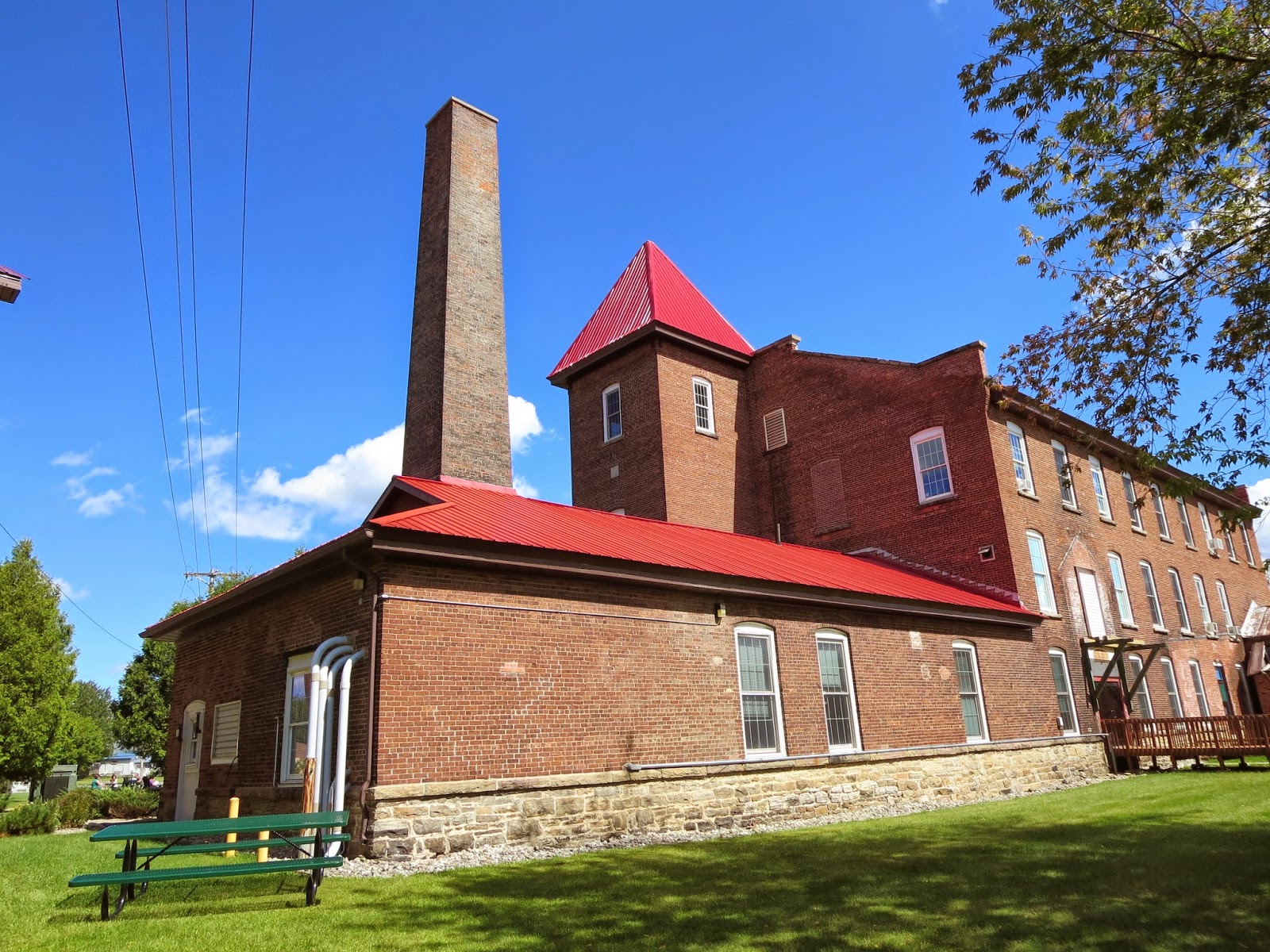
After his first woolen mill was unsuccessful, Mr. Ballard built another mill a bit upstream on the Salmon River on the site of a former sawmill. The building survives today as part of the Malone campus of North Country Community College.


Before the mill acquired a small generator, the mill produced electricity by damming the Salmon River.


Bobbins From The Malone Mill
Products

After Jay Ballard died, stock holder John Cantwell was able to purchase a controlling interest in the company. The Great Depression that hurt small businesses all across the country did not spare the Ballard mill. But with a loan from the Reconstruction Finance Corporation, the mill was able to reopen in 1936.

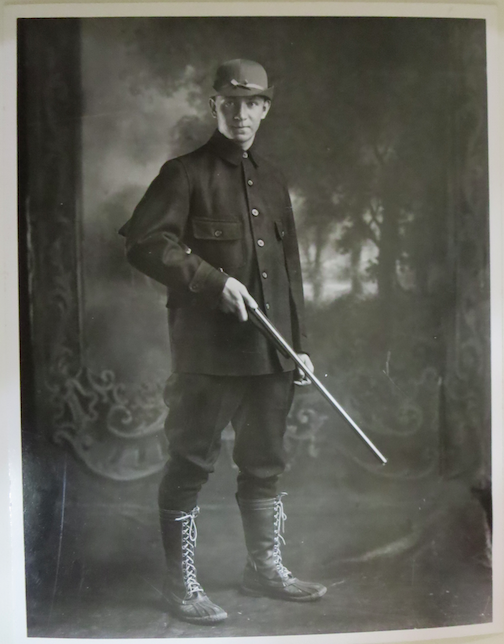
Hunters’ and heavy workmen’s clothes were Ballard’s biggest sellers.


"Malone Plaid"


Ballard also offered traditional plaids


For more images of Ballard clothing and 1920s advertisements, click on Vintage Haberdashers.

In addition to direct selling to the public, Ballard also customized orders for agencies and firms desiring high-quality woolen garments. When Lake Placid hosted the Winter Olympics in 1932, the American ski teams’ uniforms were made at the Ballard mill.  In WWII, Ballard made a khaki material for the Army. A Government Inspector was sent to Malone to watch the entire operation of fabric making. Rolls of the khaki cloth had to be wrapped in a special paper for shipping.

The Conservation Department also bought its uniforms from Ballard. Grey in color, the uniforms were made in two weights of material.

A Ballard catalog


Even L.L. Bean purchased several Ballard items for his mail order business, first making sure that his Bean label and buttons were sewn into them.

A Ballard "Hunting Suit." Do the boots look vaguely familiar?

At the mill’s height, Ballard clothes were sold in 28 states and Alaska.

The Sheep

Ballard initially bought wool from Australia and New Zealand, and graded and washed it at the mill. Before long, however, the question arose whether the mill could use wool from locally raised sheep. Experimentation began on this project, and soon local farmers and the Ballard mill itself were raising sheep. At various times, Ballard’s sheep were kept on a farm located on the Limekiln Road in Malone.

None of my homework so far has provided any further information on the Ballard flock which so interested my father in law. Malone residents who wrote about the mill may have considered the sheep’s breed as unremarkable “common knowledge” and accordingly saw no need to record it or related information.

Sheep, however, had been extensively raised for wool in Vermont by the mid 1800s. Adirondack history is amply supplied with the names of Vermonters like Apollos "Paul" Smith who migrated westward to New York and did well. It would not be a reach to hypothesize that sheep that were doing well in Vermont might have arrived and thrived with their emigrant owners. The Fairbanks Museum & Planetarium in St. Johnsbury, Vermont wrote in 2003 that the development of Merino sheep breeding kept sheep farming important in the 1860s and 1870s. The Merino obtained a higher degree of perfection in northern New England than in any other section of the United States. The combination of breeding skill and climate brought out heavier wool characteristics that gave the breed an excellent reputation for superior wool. Merino sheep are also noted for their hardiness and herding instincts. Having a cleft lip allows these sheep to graze on just about everything. Poor, rocky soil like that found in northern New York therefore would have made fine grazing land for Merinos.

As this point, The Smart People would intone "clearly more research is needed." I prefer to fracture Johnny Cash's song and promise that I'll keep my eyes wide open all the time for any more information about the Ballard flock.

Denouement

The demand for heavy woolen items declined after WWII. Inexpensive woolen imports from recently rebuilt modern mills in Japan and Italy took some of Ballard’s business. Newly introduced light synthetic fabrics and a decline in numbers of American small farmers, lumberjacks, and assorted roughnecks contributed to a collapse in demand and the inevitable closing of the mill.

Johnson Woolen Mills bought Ballard’s copyrighted plaid after the Malone mill closed in the 1960s. “Malone plaid” or “Ballard plaid” is still available from the Vermont mill, although Ballard’s 100% wool fabric has been replaced with an 85% wool - 15% nylon blend. The Johnson website calls the pattern “Adirondack plaid.” L. L. Bean also offers this plaid in their "Maine Guide" Pants and "Maine Guide Zip-Front Jac-Shirt." While it's great that this plaid lives on in its blended version for contemporary consumers who may not be quite sure what "Malone cloth" is all about, the Cold Duck just blushes, and you and I exchange a knowing wink.


Tuesday, December 24, 2013

Don’t Give Me That Baloney! I Want Real Bolognese!

Living up here on the frozen tundra near Buffalo, NY, I am partial to recipes for “comfort food” to get us through the July 5-to-next-July 3 winter season. A long while back, I found a quick and easy recipe for “Spaghetti Bolognese” that we’ve served now and then. The recipe included, among other things, spaghetti and sour cream.

I recently stumbled upon an article about Pasta Bolognese from genuine gentlemen of Bologna. Its revelations consumed me with shame for serving a poor, domestic, “Family Circle” sort of Bolognese all these years. I think you’ll enjoy the entire article including, of course, the Bologna locals’ recipe.

When Nancy and I tried the Tagliatelle Bolognese as suggested, we were left just a bit flat. Some of the disappointment was due to short cuts I took in my preparation. So last night I resolved to give it another try, making changes and substitutions that might work better in our house. Here’s what I changed:

1) I took pains to mince the celery and carrots to almost 1/8” size this time;

2) Instead of using diced tomatoes, I used crushed tomatoes. This was a good move to improve plate appeal;

3) We had some leftover shiitake, cremini, and oyster mushrooms in the crisper. I recalled from last winter’s reading of Cook’s Illustrated “The Science of Good Cooking” that such toadstools contributed “umami,” or savory goodness to any dish. So I chopped them small and included them in the recipe. The chopped mushrooms did not visually stand out on the plate, but the sauce was happy they were there;

4) Instead of using ground beef, last night I used ground “pheasburger.” So tonight our sauce looked like this:


5) Although the article avers that Tagliatelle was sacred in Bologna, Nancy and I found that the wide long noodles did not pick up and hold sauce well. We have discovered this with several other saucy dishes as well. Last night we used a pasta that we find binds better with sauce: orecchiette. We were not disappointed.

Not only did this blend of ingredients have better plate appeal, it was also really tasty. Enjoy with a bottle of Chianti Classico Riserva!

Here’s my recipe for “pheasburger”:

4 lb. boneless pheasant breast
1 lb. bacon
3 or 4 large garlic cloves
1 generous handful of breadcrumbs
2 eggs
1/2 shot glass of salt


Run all ingredients through a meat grinder and freeze in 1 lb. bags.

Thursday, November 14, 2013

Upland Bird Hunting In New York State 2013-14


(Entries are arranged from oldest to newest.)

September 14 - Niagara County

Upland season has not opened yet for me. But my release club ran its annual Youth Day today, and Gordie was once again invited to be a “guide dog,” effectively opening his “season.”

Gordie clearly has a happy customer.


Young Rick was a terrific young man who was very comfortable in conversation with adults. I'm glad he got his bird.

October 08 - Erie County

Weekend rains had wet down our woodcock grounds and cooled things off nicely. Gordie moved 4 birds today in less than an hour. I was hunting with my “pheasant gun,” as I planned for us to chase released birds afterwards. It’s a 16 gauge Ugartechea from LCS with a nice finish added by Doug Turnbull. It’s a bit tight and stout for woodcock, but gunning in the gnarlies is good practice for late fall hunting for ditch parrots.

Uggie 16 gauge and the season's first woodcock.


October 13 - Erie County

I hunted The Big West Field today with Jim S. and Gordie. There was an on-and-off drizzle that cooled our coverts off so that Gordie was able to enjoy an active 90 minutes. We flushed 5 birds, shot at 4 and brought 3 home. Rumor has it that Jim will be serving those birds and some other goodies as well come this Wednesday night. I’ll let you know.


October 18 - Allegany County


Gordie and I headed to the Southern Tier today. In a spot where we have taken woodcock before, we took one more. It’s a nice spot.


October 19 - Erie County


Gordie flushed three today in the rain behind The Rifle Range. He’s now settled in for a warm nap.


October 20 - Erie County


We hunted the Big West Field with Jim S. and his friend Tom. I’m delighted that Gordie got him his first-ever woodcock.


October 22 - Erie County


Gordie and I hunted the Big West Field on a crisp, bright day that made the ubiquitous too deep puddles less onerous. Gordie flushed 4 woodcock and 2 snipe in a bit over an hour. Sweet!


October 23 - Erie County


Gordie and I hunted the Rotten Gun Club today on a confused day of black showers here, sun drenched cumulus clouds there. Gordie flushed 4 woodcock and I went two for two on the birds I actually saw. My shooting starts to fall into form around the 3rd week of the season. That’s probably because the leaves and vegetation have begun to fall, providing better sight of the target birds, and because I’ve just gotten back into the habit of shouldering my gun well.


October 25 - Erie County

Gordie and I hunted North Of The Pond today. Of the four birds that Gordie flushed, I took the only one I was able to get a shot at.

Winds of Biblical proportion are forecast for tomorrow. We’ll see.


October 26 - Erie County

“Winds of Biblical proportion are forecast for tomorrow. We’ll see.”  is what I wrote yesterday. While it was windy, it was far from a problem. The problem was there were no birds, as Gordie flushed only one in a cold and wet hour.

We took Dan on the Rock’s advice and warmed up with some soup when we got home.


October 27 - Erie County


Gordie flushed four today. I should have brought home two but missed a simple straight away. Ouch!


November 12 - Erie and Niagara Counties

Gordie flushed 3 wc today. I have never found them quite this late in the year. Maybe I should have been looking harder?

He also found two beautiful roosters in Niagara County.


November 14 - Erie County


Gordie flushed just one wc today, and happily marks the end of NY’s wc season. I’m giving him tomorrow off. Then we’ll chase ditch parrots in relatively safe areas until deer season ends. After that, if the snows aren’t too deep, we’ll head to ski country for some late season grouse hunting.

(This space saved for the next hunt.)

Thursday, October 17, 2013

How Many Woodcock Count As One Grouse?

I recently reviewed my hunting logs back to 1993 when I began hunting birds over flushing spaniels. I discovered that for every grouse I’ve taken in that time, I’ve taken precisely 20 woodcock.


There’s a good reason for this. My very productive home woodcock coverts lie north of the NYS Thruway (I-90) in the orchards of the “lake plain”, and so every hunt there is a woodcock hunt, possibly a woodcock and pheasant hunt, but never ever a woodcock and grouse hunt. When I searched my Filemaker database for “woodcock > 0,” none of the pinged records contained a grouse. I was astonished, and reran my search to make sure I wasn’t making a Boolean error. Nope. I’ve never taken a grouse and a woodcock on the same hunt.

If we had moved to northern NY as I’d wanted in 1980, that proportion would certainly be much different, as grouse were and are relatively abundant there compared with the coverts south of Buffalo near the Pennsylvania line. Even so, my numbers tell what we upland hunters all know: a ruffed grouse shot fairly on the wing on public land in NY is an increasingly rare prize.

Sunday, October 13, 2013

Down To Their Last Strike?


Listening to the ALDS game the other night, I heard the play-by-play guy say that the team at bat, with two men out and with two strikes on the hitter, was “down to their last strike.” Michael Kay used this phrase often as he broadcast the seemingly inevitable ending of games in which “Mr. Sandman” Mariano Rivera closed the ninth inning.

No matter who utters it, this statement is easily exposed as false. Should Rivera or any other closer have the opposing team on the ropes with two outs and a two strike count, any of several events - a single, a walk, a batter hit by pitch - gives the batting team 3 fresh new strikes. Claiming that the reliever is a strike away from victory is closer to the truth. But it’s not the absolute truth, because the closer could also win the game with any of several events including a ground out, a fly out or throwing a runner out stealing. He could also lose the game if the game’s on the road and he gives up a walk-off winning run.

I get the idea: the closer could win the game with one more strike, the batting team would lose if the current batter is charged with one more strike. But the batting team is not down to its last strike.

Speaking of third strikes, here's a great song about a little boy's ability to bounce back from baseball adversity.

Friday, October 11, 2013

Stephen Bodio Writes That Guy de la Valdene Reads Cold Duck!


Well, maybe not in so many words. Let me explain.

Back in March, 2010, I wrote a piece for Cold Duck that addressed the increasing amount of time I spend hunting old familiar places as I get older. You can read it here if you'd like.

In Bodio’s “A Sportsman’s Library,” he offers thumbnails of “100 essential, engaging, offbeat, and occasionally odd fishing and hunting books….” One such book is Guy de la Valdene’s “The Fragrance of Grass,” written in 2011. Of Valdene, Bodio writes “These days he shoots partridge in Montana behind easygoing dogs like working cockers, and quail on his Florida farm. At a certain age, close or familiar begins to look exactly right. ‘The past is a different country’.”

Valdene’s observations and mine clearly identify us as fellow travelers. I’m delighted that my Cold Duck post was available in 2011 to serve as an inspiration for his book. Their respective publication dates leave scant room for doubt that Cold Duck was the chicken that laid the “Fragrance” egg.


Valdene seems like a swell guy. I’d probably hunt with him if he asked, in his coverts or mine.

Friday, August 23, 2013

Fly Fishing For Trout In New York State


(Entries are arranged from oldest to newest.)

2013 May 20 - Cattaraugus County

This brown was the first fish of the day. It took a #16 Adams Wulff.

I measured the fish off the rod streamside and then off a ruler when I returned home. At 13 inches, it’s the best trout I’ve ever taken on a fly in New York.


2013 August 16 - Cattaraugus County


In the same pool where I took the 13 incher in May, I took a nice rainbow that looked a lot like this one. Unfortunately, the fish took the #16 Adams Parachute a bit deep, so I wasted no time cutting the leader, reviving the fish and watching it swim vigorously away.

The same pool provided several more strikes today and this 7 inch brownie.

This stream seems to get a damn beaver dam every year. Fortunately the stream is in snow country, and the spring runoff usually blows the dams out.


2013 August 23 - Wyoming County

This young brown solidly took a #16 Henryville Caddis in the first pool of the day. And what a beautiful day it was, certainly one of the finest of the season. With bird season fast approaching, I wonder whether I’ll have any more days like this on the water this year? 


Friday, May 17, 2013

This Creek Is Clearly My Favorite

(This post first appeared on June 14, 2011. Updates including today's appear below in chronological order.)
June 14, 2011

My mentor Alois “Louie” R. introduced me to stream fishing for trout in 1961. He was quite an outdoorsman: he had a “camp” in the Southern Tier, rifles and shotguns, a beagle named “Pepper” that was poison on rabbits, deer heads on the wall, and an old bamboo fly rod with an automatic fly reel that he used to drift salted minnows downstream. His son was grown and chasing other things by 1961, so Louie picked me up as a sort of “project kid.” I thought he was 10 feet tall.
One day around 1980, I was drifting salted minnows down stream with absolutely no luck when, after maybe 500 yards of work, I bumped into a father-son team fishing dries upstream. The father was maybe 65, the son 40ish. I asked if I might follow behind them to watch how this here fly fishing stuff was done. They said sure, come on along, and with that they continued fishing up through the stretch I’d just spent an hour wading through.

I was dumbfounded. They immediately began catching fish - nice fish for that stream - in water I had just muddled through. They were fishing one rod, alternating with each fish caught and released, and they must have caught 8 or so in the next hour. It may have been a good or average evening for them, but it was transformational for me. Clearly this fly fishy stuff worked.

Within a week, I caught a trout on a fly for the first time. It was on different water - Tonawanda Creek, to be exact - and the fly, of all things, was a #12 Hornberg that I’d picked up at the local Orvis shop. I’d initially been apprehensive whether I could make the dry fly thing work, so I asked the salesman to recommend something wet. How he suggested a Hornberg, and why I bought it, both seem a mystery now.

It didn’t take long after that for my personal dry fly style to emerge and solidify. I like to fish when I like to fish. That is, if I have four hours free and the fishing muse is chewing on my ear, then away I go. It doesn’t matter to me at all if it’s “the wrong time,” or whether the right hatch is coming off or not, or the solunar tables say “stay home.” The fish better accommodate my schedule, dammit. I realized that I didn’t need several boxfuls of flies to match all the hatches if I wasn’t going to dance to their tune anyway. I bought a bunch of Adams in #14 and #16 and I was off to the races. I later learned to add elk hair caddis flies in the same size. That was that until my eyes couldn’t follow a #16 black caddis or Adams as well as they used to. I added Ausable Wulffs to the box and got happy again. So now I have a 6-compartment fly box about the size of a pinochle deck for all my fake bug needs.

Today I fished the creek where that father-son team first slipped me the fly fish Kool Aid 30 years ago. There’s no need to keep it a secret: it’s Clear Creek, home to lovely little stream bred rainbows.

I immediately hooked up with a good fish for that water - it had my new 4 weight rod quite excited - and, desperately wanting to get a good photo of it for this blogpost, I tried to “get it on the reel.” Why I tried that with only 15-20’ of line out is beyond me. Needless to say, the fish broke off.

But I soldiered on and, after landing another fish that broke off in my attempts to photograph it, finally caught a fish who didn’t mind having its picture taken. For those who haven’t tried it, it’s easier to catch ‘em than to photograph ‘em. We’ll try to post some photos that are a bit more impressive as the summer rolls along.

This wild rainbow from Clear Creek took a #16 Ausable Wulff

May 17, 2013
A sunny 70° afternoon was forecast today, so I headed south around 11 after finishing morning chores. I parked at a favorite spot and walked a mile downstream to my usual put in. “The Office” was looking quite friendly today.


I was not on the water 2 minutes when I hooked a silvery 9” - 11” rainbow at the head of a blue-green pool. It was easily the best fish of the day. As with a similar brown I hooked two weeks ago, the fish elected to pre-lease about 5’ from my eager mitts. I was terribly crest fallen; the fish would have looked spiffy in these pages. But I got over it and soldiered on.
In the next pool, I realized I had the same fly on now which lost that nice brown two weeks ago. It occurred to me that the hook maybe had a dull or bent point, so I swapped it with a fresh #16 Adams Wulff. Two pools further, I landed the first fish of the year!:

Some fisherman might choose not to display this photo. I attach it, however, as absolute proof that I did not "lose" the previous two fish; on the contrary, my dull hook hypothesis is definitively substantiated.
An alternative explanation is Ed Zern’s observation that fishermen are born honest, but they get over it.
Several pools later, I landed a slightly better fish after changing to a #16 Royal Wulff. It was flopping around quite actively, and I wanted to get it back in the water ASAP, so please forgive my shadow in the photo.

The last and best landed fish of the day also took the Royal Wulff at the head of a long, slick, “you gotta fish me” run.

I’m considering getting a net so that I can land fish and keep them in the stream while I photograph them. I’ve never yet had one go belly up on me, but it just seems like the right thing to do. When I find a net I like, I’ll probably bring it home.

Tuesday, March 26, 2013

Boy, Can This Boykin Hunt!

(This post first appeared on December 11, 2009. Updates including today's appear below in chronological order.)
The Boykin Spaniels were simply tearing it up when I watched them running Master Hunt Tests several years ago. And though the dogs clearly had a lot of hunt bred into them, they also hunted agreeably and merrily for their guns. I suspect that the hagiographic yarns spun by the breed’s cheerleaders have a whole bunch of truth in them.

Every Boykin I’ve seen looks like a cross between an American Water Spaniel and an English Cocker, and from what I gather, has desirable characteristics of each. That’s a lot of prime dog in a 35 pound package.

The Boykin Spaniel
I might give Boykins a closer look the next time I'm in the puppy market. Whatever the next pup's breed, I’ll resort to an old trick for sneaking it in the door. When we visit the litter I'm sold on, I'll get the breeder to wander off and talk turkey with me for 5 minutes. By the time we get back, the right pup will have found my wife.

Sneaky Trick: Letting My Wife Approve The Purchase
David DiBenedetto came upon this stratagem on his own and has been happy ever since. You can read about his Boykin bitch “Pritchard” in Garden and Gun and Field & Stream.

For even more on this pleasant flushing spaniel (pheasant flushing is a value-added bonus), visit the Boykin Spaniel Society.

May 9, 2010

Here's more on the Boykin Spaniel from Jim Spencer in a recent Gun Dog magazine.

March 26, 2013

Apparently they’re terrific turtle dogs as well.